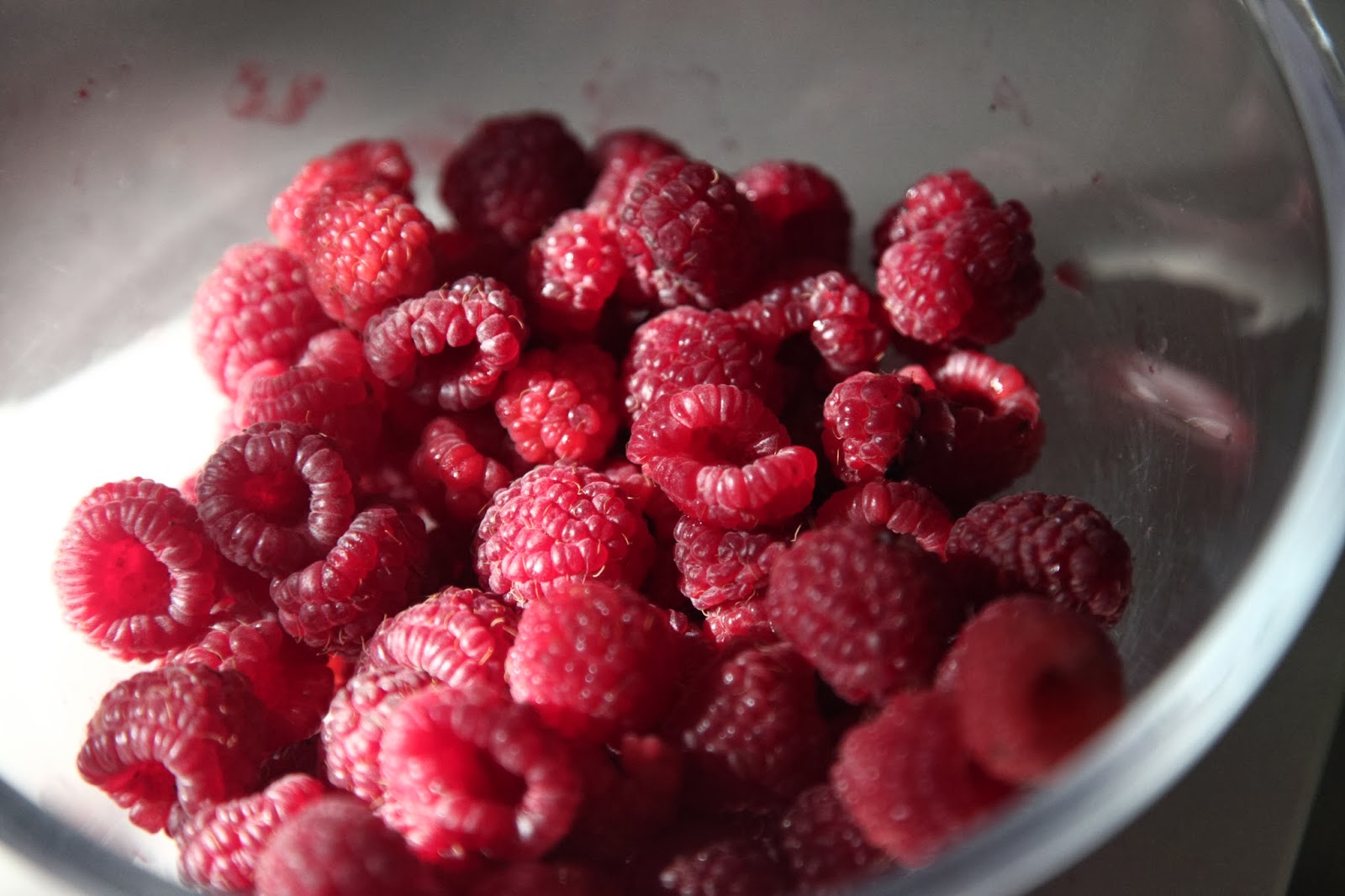
Showing posts with label Raspberries. Show all posts

Friday, 21 February 2014

Spotted Wing Drosophila (SWD)


By the halfway mark, I had found just two that were not sheltering the tiniest of white worms inside. A little stomach churning when the girls had been feasting just last weekend. A quick Google, revealed that this nearly always happens when ripe berries are allowed to sit too long on the cane, or allowed to drop to the soil below and putrefy.

This is the damage caused by the Spotted Wing Drosophila, a pest exotic to Australia and which the Department of Primary Industry (its heirs and successors forever), treats a bit like Mad Cow Disease! The most help to eradicate this pest from my garden came, however, from fellow garden bloggers, eg New Life on a Homestead. There is heaps of more technical information out there on this pest geared toward the commercial fruit grower, eg here, and here, and here.

Identification

There are a number of distinguishing features of the SWD for identification
  • They are miniscule.
  • The male SWD has two distinctive spots on the end of each wing.
  • The female SWD’s large, blade-like ovipositor.
  • They have large red eyes.
Both images courtesy of the Organic Growers' School


Prevention and Maintenance
  • Do not leave overripe berries on the vine, and do not let them fall to the ground as this will encourage an infestation. Keep plants picked clean of all ripe fruit every single day. Do not compost unwanted berries. The heat from the compost is not high enough to kill the SWD larvae and they will reemerge the following year. You can seal them in a ziplock bag and leave it out in the sun to kill the worms. Burying and composting are not reliable ways of killing eggs and larvae.
  • Keep plants pruned. Fruit flies like humid, shady environments. Thin plants out and keep sprawling varieties trellised. Burn the prunings instead of composting them.
  • Avoid any puddles or standing water in the garden because SWD seem to be attracted to these areas.
  • Do a ground clean up. SWD larvae can overwinter in the soil and reemerge the following year. Cultivate the soil around plants to expose the larvae to the elements. They don’t survive well in very cold or hot temperatures.
  • Set traps. You can put out a vinegar or yeast-sugar trap. Traps monitor for the arrival of SWD in order to guide spray programs.
  • Harvest in Spring not Autumn. Fruit flies tend to be more of a problem with Autumn crops. Prune them after the Spring harvest so that there isn't an Autumn harvest that would attract the SWD.
  • Both Entrust (Spinosad) and Pyganic (Pyrethrin) are acceptable for organic crop production. Entrust is reported to be most effective. A Spinosad containing product in Australia is Yates' Success Naturalyte, Yates' Nature's Way Fruit Fly Control, and Eco Natra Lure Fruit Fly Bait.

Friday, 27 December 2013

Raspberry reprise

There are two Heritage Raspberry plants in a garden bed along with three Blueberry bushes. This is not a goer. Kirsten complains that I am forever moving plants from one location to another, and not as a rotation cycle, more like an urge to have the sofa in a different spot! And that is true ... but mainly because I am winging this gardening lark by the seat of my pants. Is that even possible?
As you can see from this middle image, the raspberry canes are coming up throughout the bed, and will very soon, choke everything else out of soil. So, I desperately need/want a new location for the Blueberries. During 2013 I had Sweet Corn in three tall planters (two in each). However, Kisten is not keen on the smell of corn cooking and, given her jaw issues, nibbling from a cob presents challenges. So, I will not plant SW for 2014, but instead will refurbish the soil in the planters and whack the Blueberry bushes in. Must read up about their need for how many hours of sunlight.

As for the Raspberries: they are looking good for a second flush sometime in early February. The number of canes has more than doubled, and each seems to be loaded with potential fruit. I do hope raspberries are not full of their own self-importance!

Thursday, 21 November 2013

Raspberry jam in the first season? Not quite.

Did a lot of garden maintenance today. Made a decision that I was the owner of the garden, and the plants were mere tenants. They have to do it MY way! Many of them got a hair cut, including the rampant tomatoes, where entire trusses of fruit were tossed onto the scrap heap. Scavenged around the green beans trying to get them a bit of air, a bit of sun, and even some light. They are still flowering, so that is good.
Then I started to read up about Raspberries, as the fruit is 'starting' to come, but they are not bountiful, and are a bit on the small side. I know the nursery guff about this particular Raspberry (Heritage) says it fruits on 'primocanes', but my photos seem to indicate that they are only fruiing on last years canes, the 'floricanes'. The floricanes are brown, and a bit withered looking. But as you can see, the fruit is coming. I gather that primocanes will produce a small crop in the autumn. So, once these floricanes produce no more, I cut them down to about 2cms above ground level, and they will produce next years primocanes. Neat little alternating pattern this fruit has going. After the primocanes fruit in autumn I need to just trim the top of each cane, and ensure that they have air and light. DO NOT ALLOW TOO MANY CANES TO GROW. I will also not grow anything other than Raspberries and Blueberries in that bed, No more corn in there, and no more beetroot.