Thursday, 5 June 2014
Wednesday, 4 June 2014
Coles Black Leg
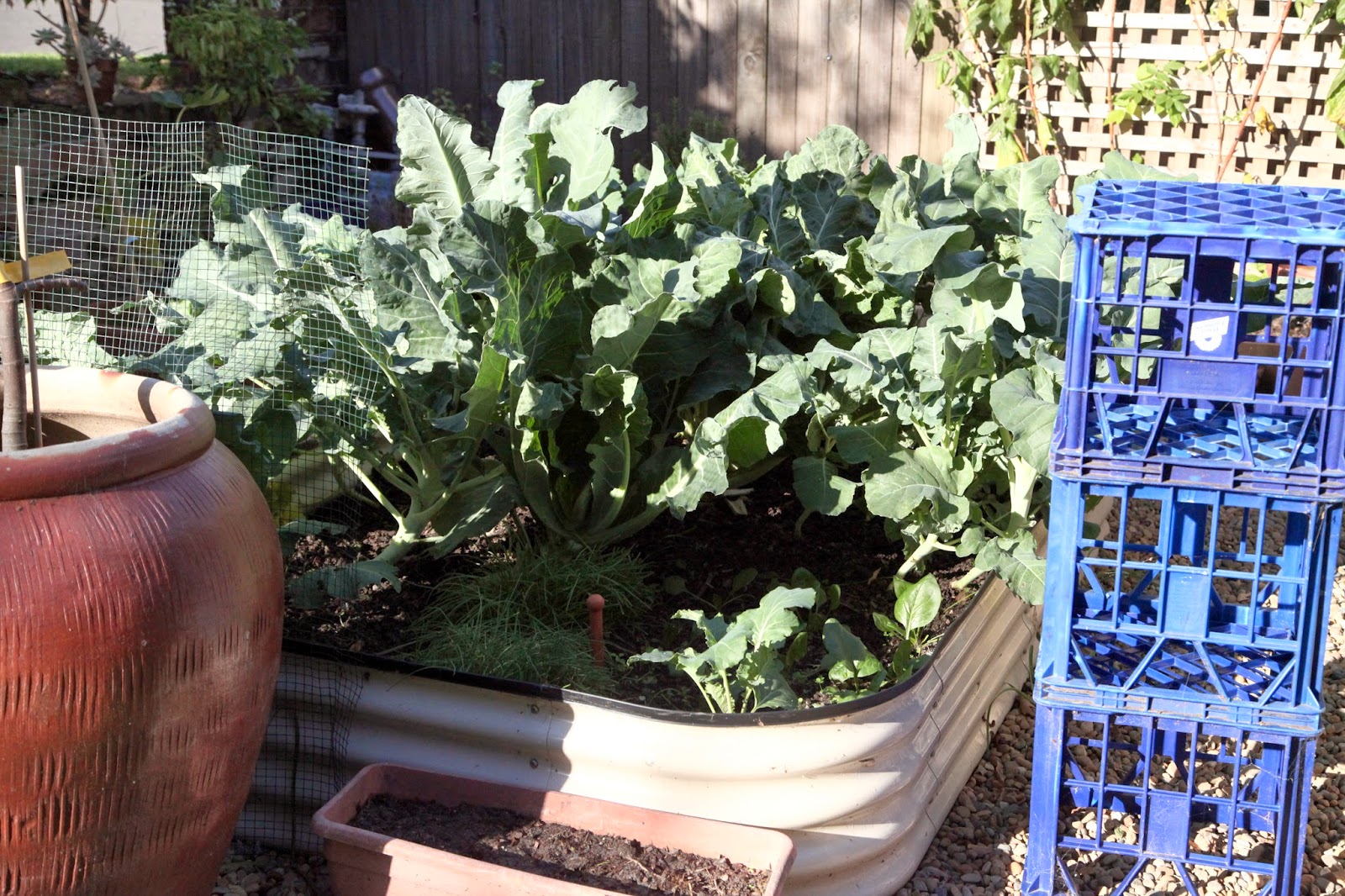
| I had originally thought this to be "black leg", a mould to which Cole veggies (Broccoli, Cauliflower, Brussels Sprouts) are susceptible. This specimen is on my Broccoli. However, when I crop the image and view it close up, the grey "crystals" appear to be bugs. My solution to this infestation, was to remove the infected plants if they were stunted, or to remove the affected leaves, if the plant appeared otherwise vigorous. I gather that most issues with Cole varieties arise due to their size, vigour, and growing too close together. AND over-head watering. My two beds suffered from all this. They looked wonderful until last week when they appeared to "sag", a bit like Alannah when she droops her shoulders to signify unhappiness. |
Friday, 18 April 2014
The geometry of succulents
| When I was a kid, I lived on a sheep farm - "Dolwendee" - which was riddled with both Prickly Pear and the dreaded Tiger Pear. It has taken me decades to come to terms with the difference between cacti and succulents, because of this. |
| However, the Rubicon has been crossed, and I am a fervent admirer of the shape, colour and diversity of succulents. I am aiming to expand the variety in my garden, especially those succulent with the tightly wound spirals that seem to abound on Pinterest |
Thursday, 17 April 2014
Staggeringly healthy again!
| Just over a year ago, when I moved from Paddington - on the south of the harbour - to Castlecrag _ on the north of the harbour - I had to detach this staghorn from the brickwall of the previous garage, creating havoc with its fronds, and with its structure. It was not in a good space for some months. However, it is a tough, resilient old biddy, and is now back to its roaring days. |
According to Gardening Australia, "elkhorns have many plants growing together in communities and they have smaller, slender fronds. Whereas staghorns tend to grow as larger individuals". So, this is one of the numerous varieties of Staghorn Platycerium grande, which are endemic to the temperate forests of Eastern Australia, They are epiphyts which means that they although they grow on another plant, they don't get food, minerals or water from that host plant. In Paddo, I used to toss in banana peels and all my veggie waste. The staghorn loved it. Here I use all that in my compost. I will try to save a couple of banana peels a week, as well as the tea-dregs from Kirsten's pot. We go through up to about 20 bananas each week. I have spent time this evening surfing for quality elkhorns and staghorns. I have found that the place in Victoria from which I sourced my Hydrangeas, also stocks Stags and Elks. Hopefully, I will get a few more little plants for the back wall of the old garage over the off-season. |
Wednesday, 16 April 2014
Going up!
When is a staircase a fence?
![]() |
| Of late, Cooper has taken to sitting halfway up the stairs, just below the landing. He does this from when he is fed until the Lynn family retires to their own living quarters. Having a foot in both worlds. Monitoring comings-and-goings. Lord of all he surveys. |
Tuesday, 15 April 2014
A garden short-back'n'sides
| The benefit, and results, of this task today is probably more apparent to me tnan to anyone else. Tall, lanky garden growth is to be avoided. Neat'n'tidy is my motto. So, today Hamish and Paul came in with their massive ladder, and their array of long-handled cutters, and trimmed the entire back garden. |
| Much of the growth was designed to screen out neighbours. Not really for privacy, but rather some aimless sort of blank that insists that other houses should not even be seen! Once screening plants like Pistosterims get too high they start to lean away from the main stem of the plant and loose their screening effect anyway. Not long after we moved in last year, I went around the entire rear garden and raised the skirt of all the plants (camelia, rhododendron, lily-pily, magnolia) to expose the understorey, which although deliberately planted, had been crowded out by the unrestrained growth. I will now go around and trim this skirt again, in the process removing the struggling Chinese Star Jasmine along the back fence which simply cannot get enough sun, and never will. In the front, the massive red camelia was trimmed (for the first time in many years, is my guess), even though it had already set buds. The Lily-Pily on the end was removed to make way for the letter-box. Getting ready for the winter hibernation. |
Subscribe to:
Posts (Atom)